The problem
Retailers needed differentiated products for upsell without the complexity of a full-line expansion, and the field needed enough context to sell an unfamiliar made-to-order offer confidently.
The engagement
I developed the operating model for introducing a focused group of made-to-order products without creating the complexity of a full-line expansion. The work connected product positioning, asset production, representative readiness, retailer activation, and post-launch learning under one launch owner.
The solution
I built a reusable go-to-market system around five initial Showcase SKUs. Instead of treating positioning, videos, signage, SKU guidance, and training as separate deliverables, the model sequences them as one controlled path from product decision to retailer adoption.
1. Use a limited release to create focus
The offer was intentionally constrained to a small product set with a clear made-to-order role. That boundary gave representatives and retailers a manageable story to learn while creating space to test demand before expanding the program.
2. Connect every asset to one product narrative
Five walkthrough videos, showroom materials, pamphlets, SKU tools, and talking points all explain the same value proposition. The system reduces the risk that each channel interprets the release differently or forces the field to assemble its own story.
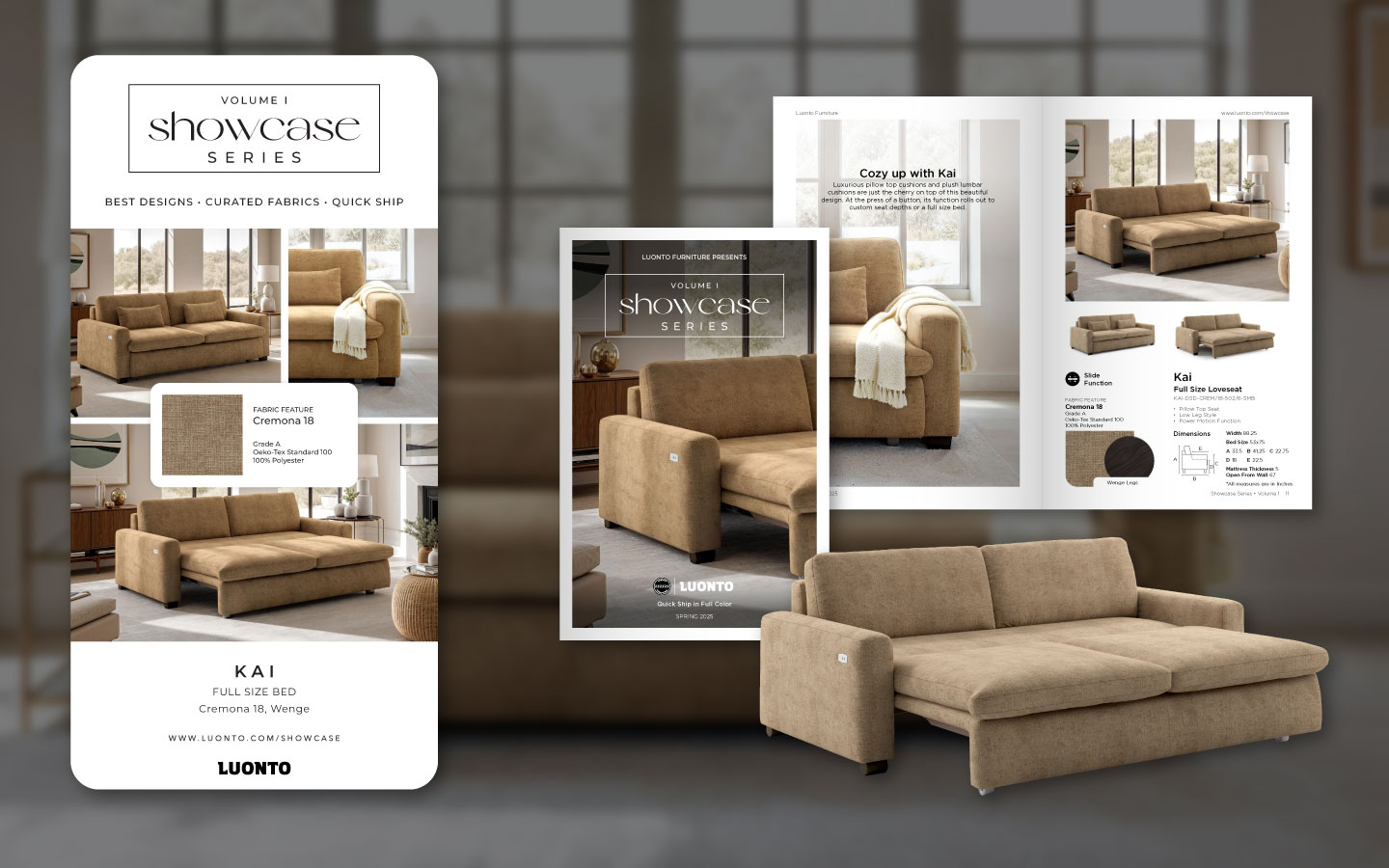
Video, showroom materials, product guidance, and selling language carry one product narrative into the retail channel. 3. Prepare representatives before channel activation
Training and controlled asset distribution happen before the retailer is asked to sell the new offer. Representatives receive the context, demonstrations, and practical tools needed to answer questions and support an unfamiliar product confidently.
4. Treat feedback as part of the launch
Retailer interest, representative signal, and SKU performance are gathered after release and carried into the next annual rotation. The model is complete only when field learning changes future product and enablement decisions.
Why it worked
The launch carried context with the product. Positioning defined the purpose, assets made it demonstrable, training created field confidence, and feedback closed the loop. Coordinating those parts as one operating model prevented the release from becoming a short burst of disconnected communications.
Outcomes
- Five initial products entered the market through one coordinated enablement model.
- The framework can support future annual limited-release rotations.
- One design exceeded expectations after launch.
- Field feedback showed stronger familiarity and confidence with the made-to-order offer.
Led GTM strategy, enablement architecture, production, rollout, and feedback design.